

Ever looked at an AC spec sheet and wondered what terms like compressor, condenser, or refrigerant actually mean?
You're not alone. Most people use an air conditioner every summer without knowing how it works—until a repair bill or buying decision forces them to learn.
The good news? It's much simpler than it sounds.
How Does an AC Work?
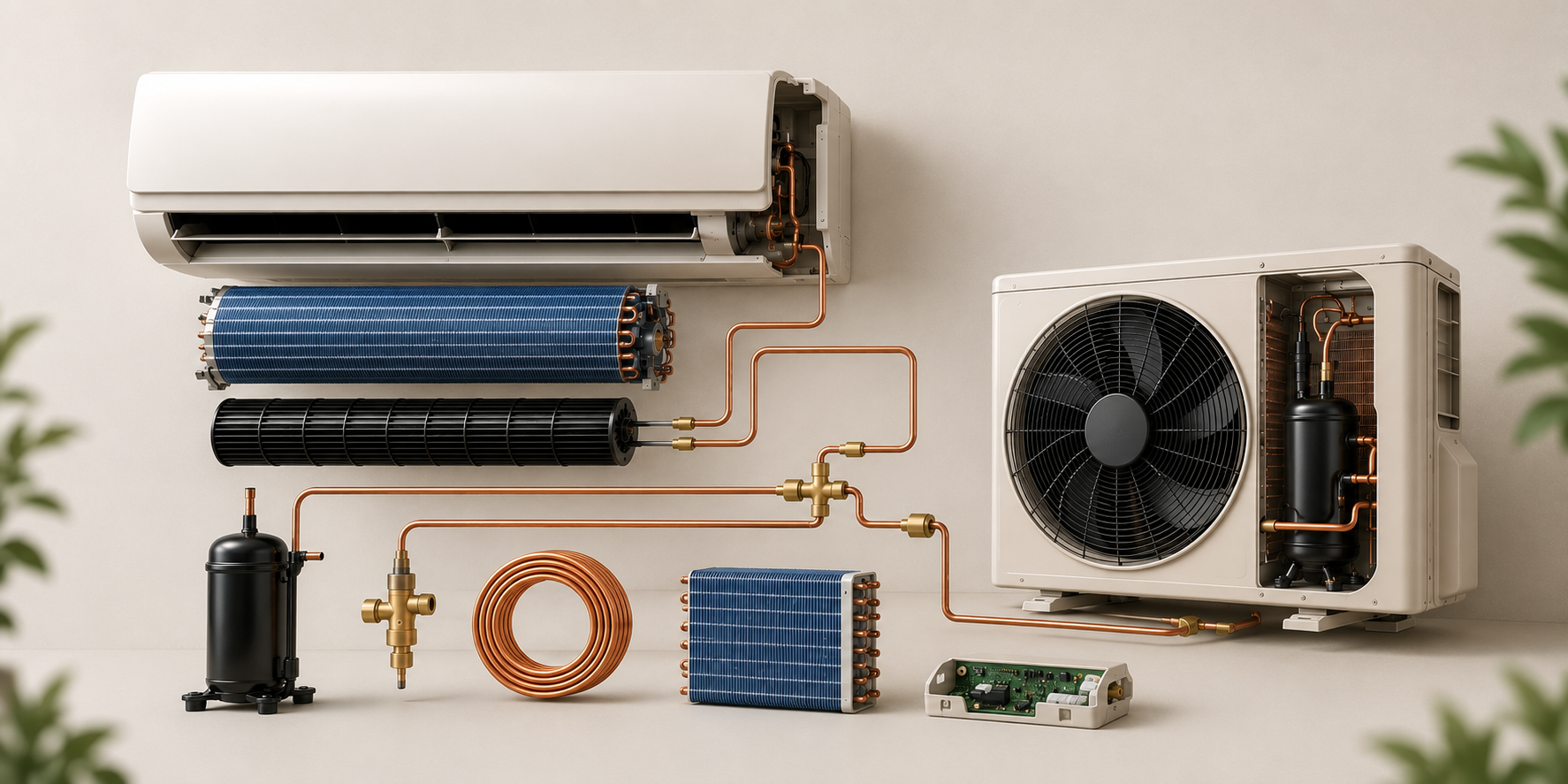
An air conditioner doesn't create cold air. It removes heat from your room and releases it outside. Every component inside the AC simply helps move that heat from one place to another.
The Main Parts
The heart of the AC. It compresses the refrigerant, allowing it to carry heat outside. It's also the most expensive part to replace.
Located in the outdoor unit, it releases heat into the outside air. Good airflow around the outdoor unit is essential for efficient cooling.
This lowers the refrigerant's pressure, cooling it before it returns indoors.
Found in the indoor unit, it absorbs heat from your room while the fan blows cool air back inside.
The fluid that transfers heat between the indoor and outdoor units. Most modern ACs use R-32 refrigerant.
One fan circulates cool air indoors, while the other helps release heat outdoors.
The brain of the system. It monitors room temperature and controls the compressor. In inverter ACs, it also adjusts compressor speed for better energy efficiency.
The Main Parts
Every air conditioner works in the same simple cycle:
Final Thoughts
Compressor → Condenser → Expansion Valve → Evaporator → Repeat
Once you understand these basics, reading AC specifications or talking to a technician becomes much easier.
Compressor
Condenser Coil
Expansion Valve
Evaporator Coil
Refrigerant
Fans
Thermostat & Control Board